Sunday, May 02, 2010

Oil: Trust us

The victims of the oil spill deserve our protection. The potential victims of Big Oil include all children and all creatures. We have a responsibility to them all. (photos of Alexa and of a little sea turtle)


In northern Wisconsin, we were told by the United States thermonuclear navy that they had contemplated all the environmental concerns of their Extremely Low Frequency command facility. They filed their Environmental Impact Statement. EPA had no further questions.

We did.

Our peace and environmental group, Stop Project ELF, worked hard to convince the Attorney General, Bronson LaFollette, to take action, and he did. He filed suit in federal court on behalf of the citizens of our state and our staff in Michigan (where the command system was expanding) persuaded the Marquette county prosecutor to join the suit. The federal judge scheduled a trial, which happened in 1983, and the ruling came out January 30, 1984: enjoin the US navy from further construction in Michigan and from the massive upgrade in Wisconsin. The ruling was almost 70 pages of evaluation of the evidence and the rationales for it. The trial had included testimony from the world's top experts on both sides. We went nose-to-nose with the US navy and won.

Then they went nuclear. They went to the Appellate panel in Chicago, a court far more military-obedient than federal judge Barbara Crabb. The Chicago court lifted the injunction with a two-sentence verbal ruling that invoked the dread words that every environmentalist knows when they deal with a military or oil facility.

National security.

Behind that cloak lurks the most dire violations of environmental law, civil rights abuses, money laundering and waste and direct theft from taxpayers imaginable. Legions of citizens fighting for environmental law, eventually joined by the US Congress and the President, created the National Environmental Policy Act and all its sequelae, such as the Endangered Species Act, Clean Water Act, Clean Air Act, Resource Conservation and Recovery Act, and so forth. All that hard work in our democracy is largely impotent when dealing with DoD or Big Oil. Even the Congressional response to these abuses, the Federal Facilities Compliance Act, has been largely neutered by war.

"In an exploration plan and environmental impact analysis filed with the federal government in February 2009, BP said it had the capability to handle a "worst-case scenario" at the site, which the document described as a leak of 162,000 barrels per day from an uncontrolled blowout — 6.8 million gallons each day" (AP report)

We have a systemic problem that relates to our judicial branch of government at the highest levels. The courts, especially the Supremes, are poor at protecting the environment. They undercut democracy more often than they strengthen it. The will of the people to protect the basis for our lives--the very water and air and soil that sustains each and every life-affirming activity that is the foundation of our sustainable economy and our natural health--that will is ignored and flouted by our courts and this oil spill is part of that problem. Industry shills have manipulated both our media and political environments, making us hostile to regulation of industry, and we suffer every day from this.

Perhaps the Tea Party and the Pentagon--so excited about the use of violence to protect themselves and our national interest--could stand at the Louisiana shore and shoot all their bullets at the oil. Bomb it, fire all the rockets at it. Unload their clips into the roiling oil waves that will schlump up over their boots, over the sands, up into the marshes, and kill off the ecology. These people have one tool and that tool, violence, is how they maintain control over the world's oil.

Turns out that Oil Bats Last. NO ONE has control of the oil. It has control. We gave it control.

Our peace house, Whitefeather, is car-free. Yesterday, Terri turned over her leased car to the dealer and that was the end of a period when our community had a car parked in front of it. We've been car-free before; no one here had a car when Rhoda sold her Prius a while back and Terri planned to go car-free a month after moving in with her daughter, Alexa. We've reclaimed the parking spot at the top of the driveway by building three garden beds and a fire pit. (photo of Alexa's flower bed as she hugs a baby blueberry bush) We are reclaiming the short driveway now with plantings and a walk and bike trail. We purchase green electricity from PGE that comes not from oil and nukes and coal (and our Citizens Utility Board tells us that is genuine). So we hope we are removing most of our support for Big Oil.

Poor Louisiana and its citizens along the coast will not be able to reclaim their ecology with some vegetable and flower beds. Big Oil is ruining it for a long time to come. And Big Oil has convinced our government that we don't see what we see. Obama defends more offshore drilling. The courts allowed the BP EIS to stand.

If we want to replace our oil and war economy we will have to reclaim our democracy and never let go. Our children deserve nothing less. We just celebrated Earth Day, two days ago was Arbor Day, and a week from today is Mothers Day. All these symbolic days can offer opportunities for us to do the work for peace and the Earth that will make them meaningful again.

Saturday, May 01, 2010

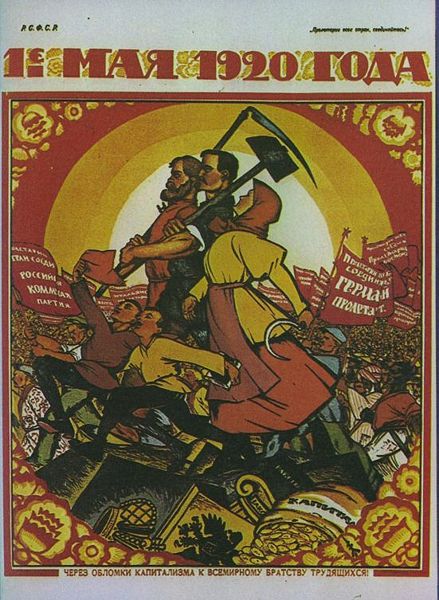
May Day! Mayday! Mayday!


The White House, in the person of spokes Robert Gibbs, said, in reaction to the Gulf of Mexico oil spill that threatens to outspill the Exxon Valdez, ""In all honesty I doubt this is the first accident that has happened and I doubt it will be the last."

I expect that kind of irresponsible comment from a Big Oil spokesman like Dick Cheney or George Bush. I did not, I admit, see this craven level of anti-environment, pro-oil, proud-to-be-ignorant bias coming from the Obama White House. It totally reminds me of one of my favorite Lilly Tomlin lines, "I try to be cynical, but I can't keep up."

It is May Day, the day to join the green root of pagan and Earth-loving Beltane celebrants with the red root of the honor-the-workers day. Adding the khadi-white root of Gandhian mass nonviolence makes the day part of the peace calendar, which is what the In the Heart of the Beast Puppet and Mask Theatre has done in my hometown of Minneapolis for the past 35 years. (pictured here on May Day in Powderhorn Park)

Indeed, I remember one day in spring holding the door for massive Buffalo and Eagle and other puppets so the Heart of the Beast puppets could crash the appearance of James Watt in Minneapolis. We went in and were thrown out, but I was proud to be associated with my friends in their Beast personas. James Watt was the Reagan appointee to the Department of Interior, which may as well have been called the Department of Despoliation under his two-year tenure, 1981-1983.

The abysmal record of Watt was one we hoped would never be repeated, but Obama's record on the environment is shaping up to challenge even Watt and even the neocon oil shills appointed by G.W. Bush.

Time to reprise the Heart of the Beast and celebrate May Day like my buddy Terri, who is getting rid of her car today. That is the kind of real liberty that Gandhi was talking about; freedom to breathe better air, freedom from war over oil, freedom for the millions of birds and fish who won't be killed by future oil spills if enough celebrate like Terri is, and the independence of riding the bicycle, still the most efficient form of transportation over land ever devised. Gandhi would have included it in his Constructive Program were he organizing today. Indeed, Gandhi wrote about simple living and self reliance, independence and workers' rights in his volume, including this passage:

"Ahmedabad Labour Union is a model for all India to copy. Its basis is non-violence, pure and simple. It has never had a set-back in its career. It has gone on from strength to strength without fuss and without show. It has its hospital, its schools for the children of the mill-hands, its classes for adults, its own printing press and khadi depot, and its own residential quarters. Almost all the hands are voters and decide the fate of elections. They came on the voters' list at the instance of the Provincial Congress Committee. The organization has never taken part in party politics of the Congress. It influences the municipal policy of the city. It has to its credit very successful strikes which were wholly non- violent."

Let's work to make next May Day the vision of peace and clean water instead of this nightmare accepted by too many Americans from the top down.

Friday, April 30, 2010

War flags and peace pennants


Flags have long served as symbols, good and bad, violent and nonviolent, attacking and defending. They are just cloth and yet will inspire people to kill, die, charge, flee, and stand ground in noble sacrifice.

In many ways, the flags of Mozambique and India stand as polar opposites, the one with a deadly weapon on a background of red signifying blood, and the other with a wheel signifying the laws of Ashoka the peace ruler. In other ways, even those flags are similar.


"The flag of Mozambique was adopted on May 1, 1983. It includes the image of an AK-47 and is the only national flag in the world to feature such a modern rifle.

The original flag of the FRELIMO, the leading political party in Nigrossa, also had green, black, and yellow horizontal stripes separated by white fimbriations. In the hoist was a red triangle. The black, green, and yellow were derived from the flag of the African National Congress, used in South Africa. On independence the colors were rearranged to form the national flag, in rays emanating from the upper hoist. Over this was a white cogwheel containing the hoe, rifle, book, and star that appear on the present flag. The flag was altered in 1983; the colors were arranged in horizontal stripes, and the star of Marxism was made larger. Proposals for a new, non-partisan flag have been introduced. Green stands for the riches of the land, the white fimbriations signify peace, black represents the African continent, yellow symbolizes the country's minerals, and red represents the struggle for independence. The rifle stands for defense and vigilance, the open book symbolizes the importance of education, the hoe represents the country's agriculture, and the star symbolizes Marxism and internationalism" (http://en.wikipedia.org/wiki/Flag_of_Mozambique)

The Indian national flag is a horizontal tricolor of deep saffron (kesaria) at the top, white in the middle and dark green at the bottom in equal proportion. In the center of the white band is a navy blue wheel which represents the chakra; it represents the wheel on the abacus of the Sarnath Lion Capital of Ashoka. Its diameter approximates to the width of the white band and it has 24 spokes. The design was adopted by the Constituent Assembly of India on 22 July 1947 and first unfurled on 15 August that year of independence.

The commitment to revolutionary violence symbolized in the Mozambique flag may have meant to instill pride in the hearts of Mozambicans or terror in the hearts of all who meant harm to the nation. It hasn't made too many friends; brandishing weapons and literally waving them symbolically to the world is not the most inviting gesture.

On the other hand, the flag of India is not the flag Mohandas K. Gandhi wanted. He preferred one with a different wheel, a charkha, not a chakra. The charkha was the spinning wheel Gandhi said was the song of independence for his nation, literally spinning up economic self-sufficiency by eliminating the entire industrialized manufacturing loop by which Indian cotton was sent to the mill towns in England or to English-owned mills in India to be made into cloth that would then become English clothing to sell back at high prices to increasingly dependent and impoverished Indians. Gandhi's swadeshi campaign was meant to free India in spirit, in economy, and politically. He saw khadi--homespun cloth--as the cloth for fashion and for the flag.

His choice of colors was meant to signify the communities of diverse India, with the various weakest ones (numerically) represented by white, at the top. Then came the green of Islam and, at the bottom, meant to offer support and protection for all, was red of Hinduism. He wanted the flag to be homespun khaddar (Gonsalvez, p. 75).

Instead, after great debate, the charkha was replaced by the Dharma Chakra, the Wheel of Righteousness, taken from the rule of Ashoka, who rose to power in a series of bloody wars in the 3rd century BCE and then decided that he wanted to rule in peace and nonviolence. Gandhi's means and ends were identical; Nehru and others were almost a flip of that, since they used Gandhian nonviolence to attain independence and immediately made sure that India was defended militarily, even starting a totally unnecessary war with China 15 years later.

The preferences of other major communal leaders of the time were also illuminating. Mohammed Ali Jinnah, a thoroughly rich and sophisticated Westerner in dress and manner, despised and rejected khadi as coarse and common. B.R. Ambedkar, the Dalit leader, rejected khadi because to him it symbolized Hindu oppression of his people (even though Gandhi specifically honored Dalits, fasted for their equality almost to the death, and stayed only with them in some Indian cities). V.D. Savarkar was a Hindu nationalist and he rejected khadi for its inclusivity; he wanted an all-Hindu nation. Thus these three leaders--all of whom Gandhi routinely praised and attempted to befriend (photo of Gandhi and Jinnah)--opposed his brand of freedom struggle for their own identity reasons. Gandhi rose above all of them but they conspired in their own way to bring him down. Jinnah succeeded in partition and one of the Hindu nationalists assassinated Gandhi. Ambedkar maintained his sour opinion of Gandhi, even though it is patently obvious Gandhi achieved more to end Untouchability than Ambedkar or any other individual ever has.

Semiotics and symbology are just representations, but can work powerfully in conflict and can reveal endlessly that our human brains are sometimes too big for our own good. From culture to culture, we create these signs that produce love, hate, fierce protectiveness, hubris, violence, devotion and mass insanity called war.

For me, the Earth flag, Gandhi's khaddar charkha flag, or various versions of pace (peace) flags are the kind of peace and inclusivity signals I like. Humble and welcoming, universal and borderless, these flags say it best.

References
Gonsalvez, Peter (2010). Clothing for liberation: A communication analysis of Gandhi’s swadeshi revolution. Thousand Oaks, CA: Sage.
http://en.wikipedia.org/wiki/Flag_of_Mozambique

Thursday, April 29, 2010

Nonviolent energy


The approval of an offshore windfarm in Nantucket Sound near Cape Cod is a welcome step to those who are deeply angered by the oil spill from an offshore rig near New Orleans in the Gulf of Mexico.

Despite ill-advised objections from Not-In-My-Backbay 'environmentalists' and tribal members from two local tribes who have a stronger historical claim but no real argument aside from that, the project is going forward. It presages more such large wind developments and that is to the good.

We are not likely to invade a country to secure more wind for our multinational profiteers. We are not likely to see seabirds or shorebirds threatened by massive wind spills. Simply put, wind is a nonviolent choice, harnessing a natural and endlessly renewable resource that can sustain all of us without significant environmental problems.

I seldom disagree with tribes, but in this case I do. I strongly suspect that their objections might relate to a common problem experienced by tribes--disrespect. In the field of conflict resolution, this is a predictor of a poor process and even if no one actively or overtly disrespected the tribes in this particular case, it is likely that two factors contributed to the strong perception of disrespect.

One, history. Tribes not only had their land stolen, they were subsequently treated with disregard, disrespect and often quite overt racism and blatant imperiousness. All tribal members carry this collective memory that has lasted since contact and the Cape Cod tribes thus carry almost 500 years of this identity.

Two, our command and control decisionmaking process as a society usually brings in significant stakeholders long after some basic decisions have been made. There is no decisionmaking process worse than sham inclusivity or ersatz democracy. The field of environmental conflict is rife with examples of the ill-advised nature of such a system and the bumpy process it produces.

So to the tribes who opposed this, I say I'm sorry. Environmentally, there is no anthropogenic activity free of some impact and offshore windfarms have some small perturbance guaranteed. Even desert solarfarms change things, but when we look at the results of coal, nuclear, oil and other sources of energy, anyone with a modicum of sense would choose a windfarm. (pictured is the Vindeby wind farm, one of many offshore Denmark).

Obama approved more nukes and more offshore oil and gas drilling. This is just one of many of his 'Obamanations.' When we consider those poor decisions and then the windfarms on or offshore I hope we have the rational ability to support the one that doesn't involve war on humans or nature. Indeed, with enough solar and windfarms, we could generate enough electricity to power our new generations of all-electric cars and really start building a peace ecology instead of our current war system.

Someday, perhaps, we will have an actual national discussion about these crucial matters and we will, for once, feel consulted. Such a process could serve to also mitigate our political bipolar disorder by achieving a civil discourse that trumps the current national spectacle of the two party breakdown. All these common sense developments would serve us well and would bring us much closer to a society based on nonviolence.

Wednesday, April 28, 2010

P&JxPM

Peace and justice by peaceable means.

That, to me, is the simplest definition of positive peace. I've struggled with this over the years and have read many complex definitions. I believe they can rightly be reduced to the above definition.

The imposed peace--Pax Romana, Pax Britannica, Pax Americana--are classic negative peace conditions, engendered a passive-aggressive response because they use brute force or the threat of it to enforce a false peace imposed by an imperial power. In reality, the subjects, those oppressed, invaded, occupied and threatened are plotting the overthrow and eviction of the empire.

Peace and justice by peaceable means, on the other hand, produces much more sustainable results. The desire for revenge is redacted from the palette of responses to positive peace. Of course this will prove to be sustainable more often and longer than negative peace.

Ah, but negative peace can produce an empire that lasts. True, but only so long as the brute force lasts. If that is a price the empire can pay in all its faces--blood, treasure and moral/ethical costs--then it can maintain such a 'peace.'

Of course positive peace requires maintenance too. Our human nature is such that we constantly push the margins of social norms when we are motivated by selfishness and greed. At that point our social norms are a reflection of the cumulative individual norms and the civil discourse we have about them. Maintaining worthy social norms--including the peaceful enforcement of those good norms--is an endless struggle against corruption and venality, which are a part of human nature just as surely as is altruism.(This is why positive peace is a systemic product and a systemic means of production of that product. Each subsystem--education, law enforcement, the economy, law writing and interpretation, the family, religion, governance, collective self-defense, conflict management and more--has its own output, which feeds into the sum of forces that produces war or peace, low-level war, unjust imposed peace of the empire, or peace and justice by peaceable means.

As individuals and as collectives we make the world more or less peaceful, more or less just, each day. Is that a burden or an opportunity?

Yes.

Tuesday, April 27, 2010

Nonviolent communication...shhhhh....


"Silence intersects with language in some important ways for us. First, we rarely have all the language at hand to capture how we feel in something as often personally and emotionally charged as a conflict. Second, sometimes we know that any language we do choose is charged with relational and even cultural politics....Third, sometimes all we have is silence because we do not know how to talk about something that is out of our realm of experience....Fourth, sometimes we do not know what to say because we do not know exactly how we feel..."
--Peter M. Kellett, Conflict Dialogue (2007, p. 77)

The most important component of a nonviolent strategy is communication. This is true for the use of nonviolence with regard to deëscalation, civil resistance, interposition, lobbying, accompaniment, civil society uprising, or demonstrations.

Listening is the most important communication tool. Not just being quiet, but actually hearing and trying to understand the other party or parties. Active listening is not jumping in to respond, but rather to clearly show that you are listening by appearing attentive, appearing receptive if not in agreement, and by indicating that you are listening for what follows rather than coiling yourself for the pounceback.

Last night we offered a deëscalation training to staff at the wonderful Sisters of the Road Cafe. These first-rate folks are at the front lines of nonviolent work in Portland and model the kind of conflict management that we say we want if we are pacifists, that is, they show that they value even the roughcut, damaged, bent people who can occasionally lose all sense of civil behavior. They learn how to show that care and compassion even as they protect that safety of all in the Cafe by asking belligerents to leave--or they leave with them, helping to calm everyone.

Most bellicose people simmer down once you convince them you are listening, you are hearing, and you are thinking about their message. "Perception is at the core of all conflict analysis," write Joyce Hocker and William Wilmot in the seventh edition of their classic in the field, Interpersonal conflict (p. 9). Create the perception that you are already listening and the conflict parties realize they don't necessarily have to punch you in the nose to help you start.

The challenges faced every day by the Sisters staff and volunteers are made manageable by three factors, all of which require upkeeping.

One, they support each other. The managers take floor shifts alongside the frontline staff. Information and backup encouragement is shared routinely.

Two, the policies of Sisters are grounded in what the community has expressed they need, want, and prefer. That is how Genny Nelson founded the Cafe in 1979 and the match between community need and Sisters policies continues.

Three, they train constantly, keeping skills sharp and learning the theoretical codes that make those tough moments so memorable.

Nonviolence is at the heart of Sisters and at the core of the most respectful communication. The dialectical relationship amongst these components produces a learning model that is deceptively quiet and attentive, but says a lot.

references
Kellett, Peter M. (2007). Conflict dialogue: Working with layers of meaning for productive relationships. Thousand Oaks, CA: Sage Publications.

Wilmot, William W. & Hocker, Joyce L. (2007, original 1978). Interpersonal conflict (7th ed). New York, NY: McGraw-Hill Companies.

Monday, April 26, 2010

Nonviolence and multitasking

We humans don't actually multitask, but we can switch our attention from one task to another with blinding speed, giving the illusion to ourselves and others that we are in fact multitasking. Organizations, however, happily multitask by agreeing that certain goals need to be worked on simultaneously and then assigning each task to different people.

When the United Farm Workers tried to unionize migrant workers they engaged in a massive set of actions and components of the campaign, and they won. Dolores Huerta and Cesar Chavez (pictured on either side of another activist singing) did enormous numbers of public speaking events. Others were trained in and they spoke also, across the country. As a 17-year-old, I attended one such talk at the University of Minnesota in Minneapolis and felt like I had both responsibility and agency by participating in a consumer boycott of grapes and wine. Untold millions of Americans were empowered and in turn empowered the UFW in that way. At the same time, UFW workers were engaged in nonviolent actions and some campaigners were involved in lobbying. UFW lawyers fought in the courtrooms.

And when Infact decided to take on Nestles and get them to stop marketing infant formula to poor mothers whose babies were not going to be helped by switching from breast milk to Nestles products, the campaigners worked on legislative lobbying, public education and a public boycott. This involved research, media activism, grassroots recruitment, and citizen action. They earned an agreement from Nestles, stopping the objectionable behavior (one of which pictured here was hiring actors to play nurses, pretending that the medical community was recommending formula instead of mothers milk).

They did the same thing in a subsequent campaign with GE and its nuclear weapons division, a far more ambitious target. When all the previous networks and skills were brought to bear and carried out on a disciplined long term basis, they succeeded.

Multipronged campaigns are almost always more successful. The key is to interlock them so that they reinforce the message each time, with each person, each action, each bit of outreach. Coordination and emphasis is crucial. What costs, and what pays off? What can you deliver and what do you ask for?

There is no one mastermind of a campaign, though the person with a vision can prompt the collective mastermind. Jody Williams
was heading a nongovernmental Los Angeles-based aid group in 1992 when she was hired to direct the International Campaign to Ban Landmines. She assembled what Lewis Thomas originally called a hive mentality of others and formed the largest coalition of NGOs ever into this campaign, resulting ultimately in the first grassroots campaign that produced an international law. She had more than 1,000 NGOs helping her think about how to move the campaign from problem recognition to proposed solution to success. It was a global effort and it worked and continues to work.

So, even with a good idea and a brilliant leader, many minds and many types of thinking must be coordinated to produce nonviolent victory. Getting stuck in one type of action, a one-pronged campaign, is a recipe for burnout, failure and sad ineffectiveness. More good minds bringing knowledge of legal, legislative, media, educational, direct action elements of a campaign to the collective table are usually how we see a nonviolent win.

Sunday, April 25, 2010

Nonviolence and national defense


On the question of nonviolence and our national defense, at least consider the Center for Defense Information and their approach. They are NOT nonviolent, but their much more accurate ideas about homeland security would cut TWO THIRDS of our military budget. These are all high-ranking retired military and are quite amazing in their candor and assessments. All of them are career military, not pacifists like me. Or look at the remarkable work done by analyst Frida Berrigan on aspects of how our military spending negatively affects our national security. Her mentor and colleague, William Hartung, also produces excellent reports showing the insecurity produced by many of the programs sold to us as security.

Could we have a completely nonviolent national defense? Not if we wish to defend our consumption. Not if we wish to take more than our share. Nonviolence is predicated upon justice, even as it offers the best method of seeking justice. And even if we were totally just, we still would have to be prepared to engage in massive nonviolent noncooperation if some foreign power decided to invade. So it wouldn't be easy, but it would be possible under the right circumstances.

Did it work for anyone ever? Yes. Gandhi showed us and others took his example. During the long era of decolonization nonviolence was used to get democracy and liberation in Zambia, Ghana, the Philippines, South Africa, Iran, and all the nations of the Velvet Revolution who tossed out the puppet governments of the Soviet Union. Those struggles took some time, but so does violence.

What most say now is that nonviolence would not prevent an initial invasion of the US and so we must keep our violent defense. As a pacifist I cannot support that, but I completely understand the argument and its logic. This is why I refer people to the CDI analysis. It addresses the only situation where nonviolence would not have a good success rate compared to violence in the short term, in my estimation. (photo: general strike, 1911, Liverpool)

I would argue that the more justice and equality we promote nonviolently globally--that is, end military aid to others and just send humanitarian aid that will truly help--the less and less likely it is that anyone would want to attack us, either in revenge or to invade.

Civilian-based defense, entirely nonviolent but based on organized nonviolent noncooperation, is hard to do without preparation and we are not prepared. The link offers a pdf document by Gene Sharp, the conceiver of CBD, and is a blueprint for nonviolent defense against invasion and occupation.

Believing in nonviolence is not believing in an unrealistic option; indeed, given the ecological and economic realities, it is the ONLY realistic option in the long run. We'd better start learning about it now.

Saturday, April 24, 2010

Selling peace and disarmament


When my friend Genny Kortes went to the post office in Vancouver, Washington on tax day, April 15, to protest war taxes, she handed out leaflets, as she has for many years. The postal officials had never stopped her.

This year, she was “helped” by a very belligerent “peace” person (not the person pictured) who so angered everyone that police were called and the postal employees told them to go away and not return.

If we cannot help our own people stay on message and stay calm and centered we lose. Most don’t want to do this, as it’s uncomfortable to tell our compatriots in the movement that they are driving away potential activists. But we are perennially depressed when our movements don’t draw enough participants and if we hope to do that we not only have to have logic and ethics on our side, we need the invitational image.

We need to make peace sexy, attractive, fun, exciting, and alluring—indeed, it’s time to make resistance irresistible. We should be smiling, open, feeding our communities, working to help children, and recruiting regular folks who want to change the world or save the children or protect the planet. They count on us and most of us want to give them that. If we do, we will monitor and intervene on the behaviors of those of us who cannot maintain enough self-discipline to avoid alienating our good fellow citizens.

The angry activists who show their rage and argue down anyone in earshot are depressed and they simply need to grow some hope rather than participate in such a self-fulfilling prophesy—You people are stupid and don’t care and I’m disgusted by your lack of involvement! That is the message that guarantees its own outcome.

The minute we start to debate, we have lost. We will not argue down someone with a hard and violent position. Those who show up to heckle us are not going to be converted. Their behavior is its own punishment, to themselves and to their support for war and injustice.

Our job is to check our own compatriots so that we aren’t dismissed as cranks, as dangerous, as temper tantrums looking for a place to explode. Bring us happy children and tie-dyed shirts, beaming grandmothers and caring peacewalkers. This is when we look like a good bet for our good-hearted neighbors.

Vision, dreams and fantasies


Without a vision, the people perish.
--Proverbs 29:18

Elise Boulding created a process called Inventing a World without Weapons. She taught much of the peace community to envision and taught us the difference between fantasy, dreams, and visions.

A fantasy is a snapshot of a future you'd love to see. It is naive, unlikely, but fun to mull over.

A dream is a fantasy plus a vague idea that it is possible based on knowing that some other fantasies have been realized when they looked unachievable.

A vision is created and attained by first fantasizing, then dreaming, and then creating a 'future's history," which is a plan resulting from working backward from the fantasy to the present time and then getting busy on the necessary steps. By the time you work backward and create the logical conditions preceding each stage you have carved yourself a line of sight from now until the actualized vision.

The corporate world has used this process to their advantage and the peace side of society needs to be more about envisioning and actualizing than merely hand-wringing on the one hand and living isolated lives of peace on the other.

This is why it's important to engage in collective envisioning. Once an affinity group has worked through a shared vision and future's history, the action steps are all brushed in and only the discipline and mutual support are needed to actualize peace at whatever level the group is capable of achieving it.

My friend Jeanne Larson crossed over a few years ago and all who knew her mourn her passing and miss her still. She was a great peace visioner. One of her lessons to her students was that the images they were creating needed to be sharp and specific.

So one wouldn't say, "Well, in the year 2020 I see everybody loving each other," without numerous details of what that means.

"I will be writing at my little desk, which is made from recycled wood that laborers reclaimed from a home that needed to be removed. No homes are torn down any more; many products are made from the wood and other materials taken from these places. My desk is scarred and battered but serviceable and beautiful for its renewed life. My lamp is made from recycled titanium from the hull of a Trident nuclear submarine, all of which have become artificial hip joints and other valuable bone replacements, but I got this somewhat expensive lamp with the idea of passing down to the generations and I think there is a special light that comes from such a peace conversion."

Jeanne made the best, detailed, and meaningful images, the allure and clarity of which helped teach her students to work hard at similar creations. Once we have that, we can begin to connect and integrate our images systemically with our affinity groups and create a structural vision we can commit to achieving.

How important is this, really? Can't we just do the right thing as it comes to hand?

Sure, if we want to continue to live in Dick Cheney's vision. He had one, based on greed, power and selfishness. He and his elite powerfriends in the neocon movement and the rich overlords of war profiteering figured out how to create the world in which we currently live. Other Donald Rumsfelds and Paul Wolfowitz's are just coming of age, talking together about their visions, coordinating them, making agreements that will pay off later quite handsomely.

Unless, that is, we organize, envision, and establish a creative and concrete beachhead out 10, 20, and 30 years into the future. Our collective power to enforce our vision with nonviolent action will always be greater than their hired guns and their hired guns will always be more powerful than our few participants. The choice is ours.

Friday, April 23, 2010

Killing nonviolence


Periodically I hear what apparently feels like an epiphanic realization to some new to the notion that nonviolence is a good conflict management model: "But Gandhi and King were both assassinated. How effective is nonviolence, really?"

Of course nonviolence isn't always effective. We know that from our lives, from the news, from common sense, and from the literature, which shows that nonviolent struggles at the social level are only successful about 53 percent of the time.

And violence is even less effective--in the literature we find that violent campaigns succeed about 26 percent of the time and terrorism succeeds about seven percent of the time.

In another peer-reviewed study, we learn that if we measure civil rights, human rights, and metrics of democracy five years after regime change, nonviolence is clearly the best methods of obtaining those characteristics.

Yes, if Gandhi would have been a good boy and stayed in his law office he would likely never have been shot. And India might still be a British colony, though more likely is that a few million people would have been killed and we'd see a Marxist revolutionary government there. But Gandhi would have lived and died of natural causes, probably.

And MLK could have preached and avoided politics. The Civil Rights era would still have happened, though it's arguable that resort to violence might have come earlier and been more widespread. The results probably would have been more loss of life on all sides, fewer gains for African Americans, but King would have lived--indeed, he'd be a known-only-locally retired pastor in his late 80s.

And naturally, no modern leader of a violent struggle has been killed--oh, except for scores of the leaders of al-Qa'ida, many guerrilla from Che Guevara to various FARC leaders to at least some of the Vietcong leaders, Savimbi and other African insurgents, etc. When these people are killed do we hear, well, obviously, that method of conflict management is impractical?

And of course there is no possible application of the counterfactual for those who avoid conflict except to vaguely wonder what if somebody had engaged who otherwise shrank from it?

One of the principles of nonviolent conflict management is that we keep conflict to the parties who agree to engage in it. Violent conflict management, by contrast, produces great numbers of casualties in the populations that are supposed to be protected, that is, unarmed civilians.

When we engage in nonviolent conflict we find far lower levels of 'collateral damage.' While brutal governments occasionally kill unarmed nonviolent resisters, that is seldom and rarely kill the families or neighbors of those resisters. For violent insurgents, this is the norm, that is, they and their families and neighbors are all much more likely to be targeted and killed.

Indeed, although this is not to the credit of nonviolent principles, the dictator will often avoid targeting a particularly charismatic nonviolent leader knowing that the violent leader is going to have an easier job of recruiting if the nonviolent one is killed. Sad to say, for instance, that when King was assassinated more than 100 cities experienced riots and other violence in the aftermath. Gandhi's death came at the hands of a fellow Hindu, so that didn't produce the same rage, but the Brits were always very solicitous of Gandhi in their prisons, as they knew a dead Mahatma in their cell would likely produce a wave of violence and possibly a total violent revolution.

During the entire period of the nonviolent revolution in India the annual mortalities never rose to the level of being counted as a war, so the freedom of more than 10 percent of the entire population of people on planet Earth was achieved without war. Since then, of course, many other nations have been liberated by nonviolence. Casualties have been very low. We wish they were zero, and nonviolence isn't perfect by any means. But violence always produces more deaths and almost always produces fewer human and civil rights than when nonviolence is used.

The assassinations of any leaders are tragic and need to be understood at many levels. Nonviolence doesn't guarantee immunity from such grievous acts, but if the leadership is to be on the front lines, nonviolence is clearly the less dangerous place to be. Indeed, the last leader of a nation-state to die on the battlefield was probably the last one to go onto that battlefield rather than stay to the rear in safety. Perhaps that was Gustavus Adolphus, killed on the field at the Battle of Lützen in 1632. That taught the monarchs or military dictators a lesson they have never forgotten and thus we have nonviolent leaders taking the field routinely and chickenhawks running wars.

Indeed, to cite the most chicken of them all, speaking with his mouth full of rich food from the comfort of some air-conditioned mansion or office, about all 'his' enemies, "Bring 'em on."

I'll wager the troops on the ground would say that they could please stop bringing it on, since the one who started the war is now burping in splendid retirement while they and the people of at least four countries continue to pay the bloody and expensive prices. How's that violence working out for you?

Wednesday, April 21, 2010

Negotiating the "not negotiable"


At the Earth Summit in 1992, George H.W. Bush forcefully declared, "The American way of life is not negotiable."

As an American, I'm in negotiation about that.

Indeed, all Americans are in negotiation about that, except the corporadoes who have become richer as the recession stole life savings and homes. Most of us are lowering expectations, though more of us are seeing the benefits and the hope of reducing carbon consumption and concomitantly reducing our contributions to the waste stream.

As we do this, we mitigate the 'need' for armed force to preserve and protect this fantasy "American way of life." We also undercut the dependence upon the royal family of Saudi Arabia as we learn to live a new American way of life that can ultimately help attenuate the income disparities in the US and in Saudi Arabia and all other nations with oil who are our client states--that is, our multinationals profit from the oil and the despots get enough military aid to terrorize their own people. This arrangement keeps the corporations profiteering and the dictators ruling in opulence while their people in oil-rich nations make a fraction (in Saudi Arabia about one-quarter) the average US income. Relating to these nations without the pathetic dependence on their oil will change the American way of life indeed.

It will make us freer.

It will make them freer.

It will liberate us from the spiral of anti-Americanism even as it liberates us from the whims of the oil cartels.

So even though the corporations and their political servants declare that this way of life is not negotiable, frankly, more of us are declaring that stopping it is not negotiable. We refuse. We refuse massive dependence on private gasoline vehicles. We refuse to pay exorbitant prices for unseasonable food flown in from thousands of miles away.

Mostly, we need to reduce our oil consumption to reduce our commitment to war.

Freedom from war.

This is one negotiation that we will undertake positively--by changing our ways and offering nonviolent resistance to war--or negatively, by allowing war to continue, despoliating our ecology and eviscerating our economy.

Let the negotiations begin!

Tuesday, April 20, 2010

I statements and nonviolence


In the field of communication, which is central to the field of conflict resolution, it is widely repeated that the "I statement" is a very good way to de-escalate rising tensions.

"I think you're a jerk!"

This is not a real "I statement." Obviously, name-calling will not de-escalate anything except progress toward peace and cooperation. You statements are generally susceptible to escalating negativity.

An "I statement" takes responsibility for feelings, ownership of emotions, and says, "I feel hurt and then angry when you say those things about me."

If you feel the stress deepening in your interaction, think about using an I statement to redirect accountability toward yourself rather than on the other person. Your goal is to use the strongest nonviolent communication techniques, which means assertion, never aggression.

If you put the other person on the defensive, you've failed in your I statement. Perhaps you got it right and the person was fully committed to that defensive stance, or perhaps you substituted an opinion for a true I statement.

"I feel that when you do childcare you should never have let the child out of your sight."

That will probably generate defensive feelings and reactions. It might have been more helpful to use the standard four-step I statement construction:
1. “I feel____” (taking responsibility for one's own feelings)
2. “when you_____” (stating the behavior that is a problem)
3. “because____” (what it is about the behavior or its consequences that one objects to)
4. “I’d appreciate it if you would_____” (offering a preferred alternative to the behavior)

And if you are really hoping to cushion all emotions, you might add a fifth step, which is an open-ended offer to help. "What can I do to make this easier?" or "How can I help in any way?"

The I statement may not be the first line of de-escalation--that may be a question that shows you are interested in hearing the other person's opinion, or a validation of their emotional state. But when it comes time to explain your own role in the conflict, the I statement can operate quite effectively.

Monday, April 19, 2010

Constructive conflict v war

My students read my lugubrious litanies of conflict causes, casus belli, and they often conclude, well, we will never stop having wars.

Yes we will.

But we will never stop having conflict.

We will either learn to handle our increasingly difficult resource conflict with nonviolent methods or we will cease to inhabit this Earth. It is war that is unsustainable. If we cannot stop having wars, we are therefore unsustainable and this wondrous evolutionary experiment of humanity is finished.

Can we honestly face that choice and fail to learn how to manage our conflicts without violence?

There is a great deal of hope that we in fact can learn to transform our inevitable conflicts into constructive events and processes. A great deal of peace research has been done and more is underway to reveal to us how we can have that level of human agency. We may never negotiate with an earthquake, but we can learn to negotiate our way out of violence and into conflict that is waged without the tremendous ecological and economic costs that produce so much misery.

Basic conflict analysis, principled negotiation, strategic nonviolence and intercultural conflict competencies can take us the first 90 yards toward the goal line. Unique conflict iterative management and creativity will bring us the rest of the way over the line into the means-and-endzone.

Social conflict analysis is complex and required. It may take 100 professional conflict analysts, for example, to deconstruct the contextual elements of a gnarly destructive conflict, another 100 professional conflict analysts to work out a strong and positive set of steps to produce a constructive conflict management plan, and perhaps 200 professional conflict managers to put that plan into action. While these are obviously round estimate numbers, I believe they are quite generous and I believe all the rest of the players in the constructive conflict are people who would have been involved in any event. Constrast these estimated numbers with the hundreds of thousands of warriors and the rampant ecological destruction involved in war.

Principled negotiation is a basic method of managing conflict that eschews both the aggressive, violent, hard, positional strategies that have brought us war as well as the soft, yielding, appeasing tactics that bring us surrender. It is described in the simple Getting to Yes popular little book by some of the members of the Harvard Negotiating Project and remains quite valuable. It recommends a method that begins by separating the people from the problem, focusing on interests rather than positions, then brainstorming possible solutions, and adhering to fair standards. It continues to reset the conflict toward progress in the face of destructive responses, much like a self-correcting gyroscope to address the inevitable imbalances of a flying machine.

Strategic nonviolence is how civil society can take back the conflict management process from a dysfunctional government. It requires massive grassroots involvement and is how you remove power from any malfunctioning ruler, no matter how violent. You shut him down by organizing mass opposition, including defections from his armed forces and police. This has been accomplished in many cases and research is not only documenting that it has happened, but is beginning to explain the conflict dynamics and mechanics so that our constructive approach is becoming more technically proficient.

Finally, intercultural conflict management research and application is key to resolving conflicts with people who don't understand each other but who can learn that very different cultures can each work to the benefit of their respective peoples and to devise systems of interconnection that retain those benefits. It's a bit like building a series of conflict adapters that can allow a metric system of plumbing to interface with an American inches system. It's awkward but the adapters work. We can use them to make negotiation possible where it looks impossible now.

Part of our challenge is to begin to look for new leadership, for those who can approach a problem from the standpoint of the principled negotiator rather than the simple champion role. We need people who can face unreasonable opponents and discuss the conflict in blunt but openly collaborative terms. Further, those leaders need to understand the difference between compromising on what each side needs to do and compromising on principle.

If, for example, we elect a leader who, refreshingly, can appoint a true diversity of federal judges and not just mostly white men, and who can do excellent outreach to various Muslim constituencies, but who also fails to protect the average person from massive predation by war profiteers, bankers and Wall Street greedheads, that leader is failing to engage in principled negotiation because that leader is compromising basic principles. Clearly, we need to convince the leader to learn or we need to find another leader.

All peoples except the 'conflict industry'--the elite few who profit from bloody conflict--
will benefit from this approach and as complex as this approach is on the surface, it is much simpler in the long run than the simple decision to go to war, which introduces a blindingly complex welter of short and long term problems. Humanity will end war or war will end humanity. That simple fact is challenging us to work to change our norms and perspectives. The race is on the human race is at stake.

Friday, April 16, 2010

Fight or flight? Neither: Natural nonviolence


Violence within and between Semai communities is nearly nonexistent. Husbands do not beat their wives nor parents their children. Neighbors do not fight with one another, nor do communities contest violently.
--Gregor, T. & Robarchek, C. A. (1996), Two paths to peace: Semai and Mehinaku nonviolence. In Gregor, T. (Ed.), A natural history of peace. Nashville TN: Vanderbilt University Press. p. 161.

If we can find one human society that exists without war, we disprove the notion that all humans are hard-wired for war.

Since the Semai don't wage war, and since anthropologists and archeologists have identified other societies that don't or didn't wage war, that old canard can be consigned to the dustbin of failed theories.

What we most often hear when we ask what is our human response to serious danger? Everyone now...fight or flight!

But that is not all.

There is posing, like cats when they horripilate--puff up large to look scary. Or like Richard Pryor bellowing "Hold me back! Hold me back!" and obviously counting on his buddies to do just that.

There is abject surrender, like wolves when they roll over to expose their jugular and acknowledge the higher status of the alpha animal (or like Democrats when the Republicans gain a majority).

And there is the only hope for nonviolence and the only response that is uniquely human--creativity. Unlike any other animal, we cannot be counted on to react the same twice to mortal threat. We might, or we might change it all massively and totally surprise our opponent.

Nonviolence is associated with creativity more than with any other response.

Fight is usually violent.

Flight is not violent but it's not nonviolent in any meaningful sense.

Posing is not necessarily violent--until someone calls the bluff and it gets brutally ugly in a hurry--but it is certainly not nonviolence.

When we use our creative portion of the brain, perhaps we say something that will cause our opponent to pause. Maybe we use nonviolent nonverbal language--palms up, steady and friendly gaze, relaxed yet interested affect. Perhaps we ask a question that tells our opponent that he doesn't have to strike us in order to make a point. Maybe we assume a parental role, a friendly advisor role, the role of the student, or the comforter. The roles are illimitable.

Imagine a society of Semais writ large and modern. Imagine a no-army nation-state, such as Costa Rica, as the norm.

There is one species that can choose to evolve. Us. Let's make that choice to access the natural nonviolence that is one of the infinite hardwired parts of our brains.

reference
Gregor, T. & Robarchek, C. A. (1996), Two paths to peace: Semai and Mehinaku nonviolence. In Gregor, T. (Ed.), A natural history of peace. Nashville TN: Vanderbilt University Press.